
Web Development
Why Qatar's Enterprise Brands are Moving from Monolithic WordPress to Headless Node.js
Car distributors, retail groups and institutions in Doha are moving their main websites from traditional WordPress to headless Node.js. Here is why, and when WordPress is still the right call.
For years, WordPress was the obvious choice for a company website in Qatar. It was quick to launch, everyone knew it, and there was a plugin for almost everything. For a small business that still makes sense. But over the last few years we have seen a clear shift among larger brands in Doha: car distributors, retail groups, real estate developers and institutions are moving their main websites off traditional WordPress and onto a headless setup, usually a modern front end with Node.js behind it.
This is not about fashion. It comes from real problems that show up once a website becomes important to the business.
What "monolithic" and "headless" actually mean
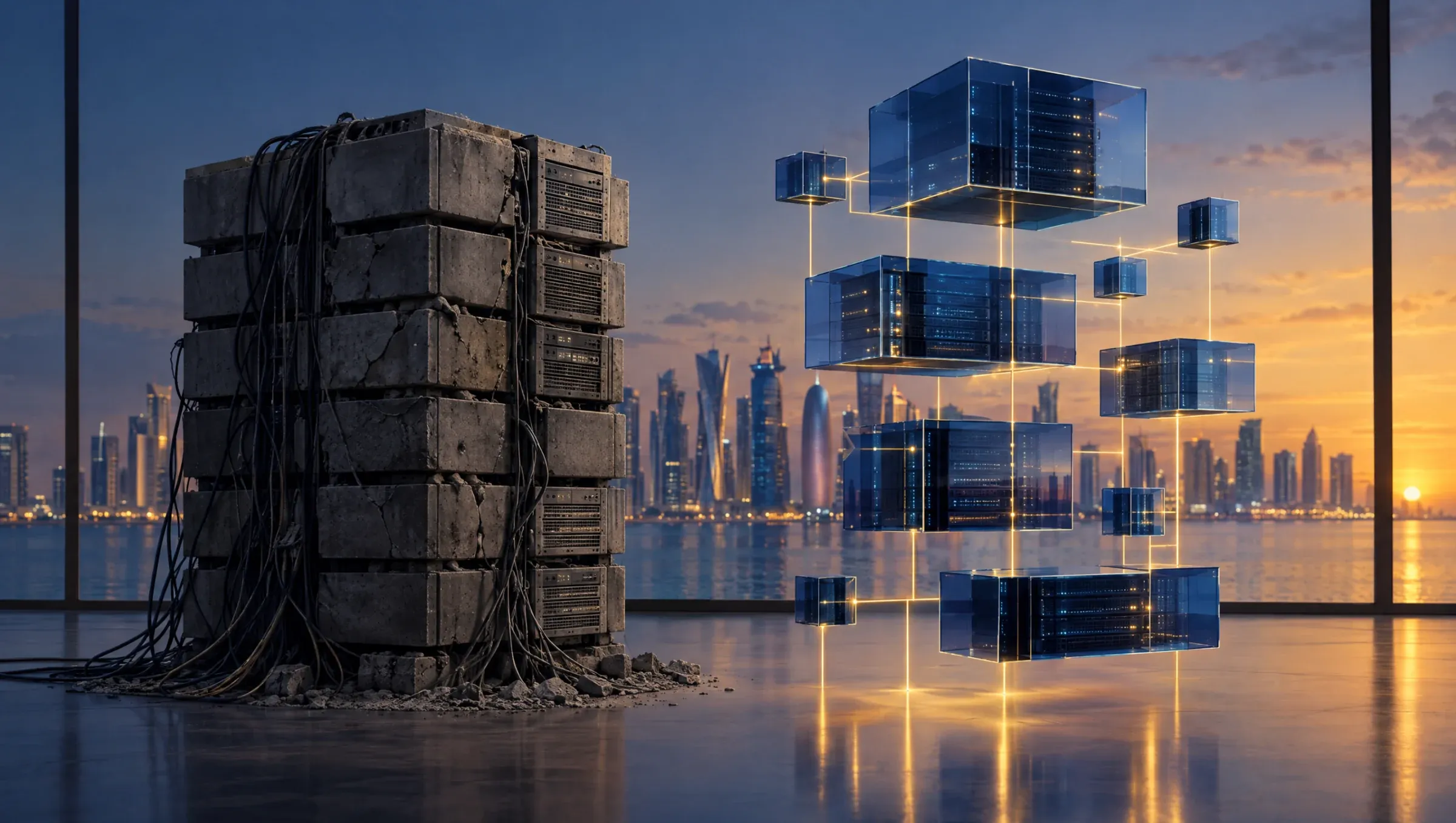
A traditional WordPress site is monolithic. The content, the design, the plugins and the database all live in one system and are served together on every page view. Change one part and you risk breaking another.
A headless website separates them. Your content lives in a headless CMS where your team edits it. The website that visitors see is a separate, fast front end (we use Next.js) that pulls that content in. Node.js sits in the middle and handles the business logic: forms, bookings, payments and connections to your CRM or ERP.
Think of it as moving from one big machine to a set of specialist parts that talk to each other.
Why enterprise brands in Qatar are making the switch
1. Speed, especially on mobile
Most visitors in Qatar arrive on a phone. A traditional WordPress page often loads its theme, a page builder and a dozen plugins before anything appears. A headless front end ships only what the page needs and can be served from a global CDN, so pages typically load in well under two seconds. Faster pages keep visitors, and Google rewards them.
2. Arabic and English done properly
Bilingual sites on WordPress usually depend on a translation plugin layered on top of a theme that was designed for English first. The result is often an Arabic version that feels bolted on. With a headless build, both languages are designed together from day one: proper right-to-left layouts, Arabic typography and separate SEO for each language. If you want to rank in both, read our guide to Arabic and English SEO in Qatar.
3. Security that does not depend on plugin updates
Every plugin is extra code that needs updates, and outdated plugins are one of the most common ways WordPress sites get compromised. In a headless setup there is no public admin panel on your website and far fewer moving parts exposed to the internet. For brands that handle customer data, that matters.
4. Connecting the website to the rest of the business
This is usually the deciding factor for enterprise clients. A modern brand website is not a brochure. It needs to send leads to Dynamics 365 or Salesforce, check stock in an ERP, take payments, book test drives or service appointments, and send WhatsApp notifications. Node.js is built for exactly this kind of work, so integrations are clean, reliable and easy to extend.
5. Interactive experiences
Car configurators, 360° viewers, property search by location, product finders: these are hard to build well inside a WordPress theme. On a headless stack they are just part of the front end. On the Denza Qatar website, buyers configure the Z9 GT in a 360° 3D view, download a bilingual PDF of their build and send it straight to the sales team, with every lead passed to the dealer's CRM.
6. Your team still edits everything
A common worry is that headless means calling a developer for every change. It does not. Your marketing team edits pages, news, offers and products in a clean editor, often more easily than in a page builder, and changes go live in about a minute.
When WordPress is still the right choice
We still build WordPress sites when they fit. For a smaller company website, a tight budget, a team that already knows WordPress, or a campaign site that needs to launch fast, it is a perfectly good option, and we have delivered strong WordPress projects for brands in Qatar.
The question is not "which technology is better" but "what does this website need to do for the business over the next five years?" If the answer includes heavy traffic, two languages, integrations, interactive features or strict security, headless usually wins.
What moving to headless looks like
A typical migration with us follows six steps:
- Discovery. We map your current site, what ranks, what converts and what needs to connect.
- Content model. We design how content is structured in the headless CMS so your team can manage it easily.
- Design in both languages. English and Arabic designed together, not translated afterwards.
- Build and integrate. Front end in Next.js, business logic in Node.js, connections to your CRM, ERP or payments.
- SEO migration. Every old URL redirected to its new home so you keep your Google rankings.
- Launch and tuning. We watch real visitor behaviour for 30 days and improve what needs improving.
Most company websites take 6 to 10 weeks, and larger platforms 10 to 16 weeks.
The bottom line
WordPress built the web, and it still has its place. But for enterprise brands in Qatar, the website has become a sales channel, a service desk and a brand showcase at the same time. That job needs speed, security, proper Arabic and clean integrations, and that is why more of them are moving to headless Node.js.
If you are weighing up a rebuild or a migration, talk to our web development team in Doha. We will tell you honestly whether headless or WordPress is the better fit, and send you a clear proposal within 24 hours.